Skip to main content Lecture 2 Behavioral Finance | October 9th, 2023
Behavioral Economics
- A number of economic frameworks assume that humans evaluate financial decisions consistently and rationally
-
Heuristics
- Humans make a vast majority of their decisions using mental shortcuts
-
Framing
- Humans use anecdotes & stereotypes to understand & respond to events
-
Market Inefficiencies
- Mispricing or non-rational decision making
Anchoring
- People estimate answers to new & novel problems with a bias towards reference points
- Common examples
- Price you bought a stock at
- High point for a stock
Mental Accounting
- Money is fungible, but people put it into separate “mental accounts”
- Also known as “bucketing”
- Example:
- Lost Movie Tickets
- Lose 40 dollars or two tickets in advance (no one wants to buy movie tickets twice)
- “Found Money” → parents’ money
- Real world problems: Vacation Fund & Credit Card Debt
Confirmation & Hindsight Bias
- Very different biases, but often conflated with each other.
-
Confirmation Bias
- We selectively seek information that supports pre-existing theories, and we ignore/dispute information that challenges or disproves them
-
Hindsight Bias
- We overestimate our ability to predict the future based on the “obviousness” of the past
- Confirmation of the two is particularly bad
Gambler’s Fallacy
- We see patterns in independent, random chains of events
- We believe that, based on a series of previous events, an outcome is more likely than odds actually suggest
- Example: Dinner Party & Coin Flips
- Real odds might be 51/49, but we tend to jump to 80/20
- Likely cause: the rarity of “independent events” in day-to-day experience
Herd Behavior
- Tendency to mimic the actions of the larger group
- Building Psych Experiment
- Empty Supermarket
- Crowd psychology may be a contributor to bubbles
- Bucking the crowd creates stress & fatigue, it gets harder, not easier.
- Easier to be “wrong with everyone” than “right and alone”
Overconfidence
-
Dunning-Kruger Effect. The more poorly you perform, the more you over-estimate your performance
- Capability in one domain can lead to overconfidence in others
- Humility is a virtue
Recency & Availability Bias
- Recency Bias
- We overweight recent events in our decision making
- Example: 2008 Financial Crisis & Celebrity Illness
- Availability Bias
- We assume that the data we have been provided is representation of the entire data set
- Studies show checking stock prices daily leads to more training & worse results on average
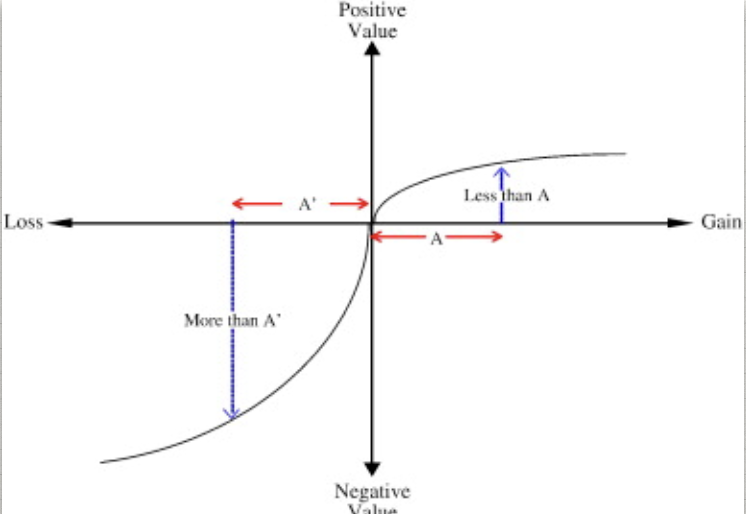
- We hate losses more than we love winning
- We even hate being responsible for losses → it’s OKAY to not be rational